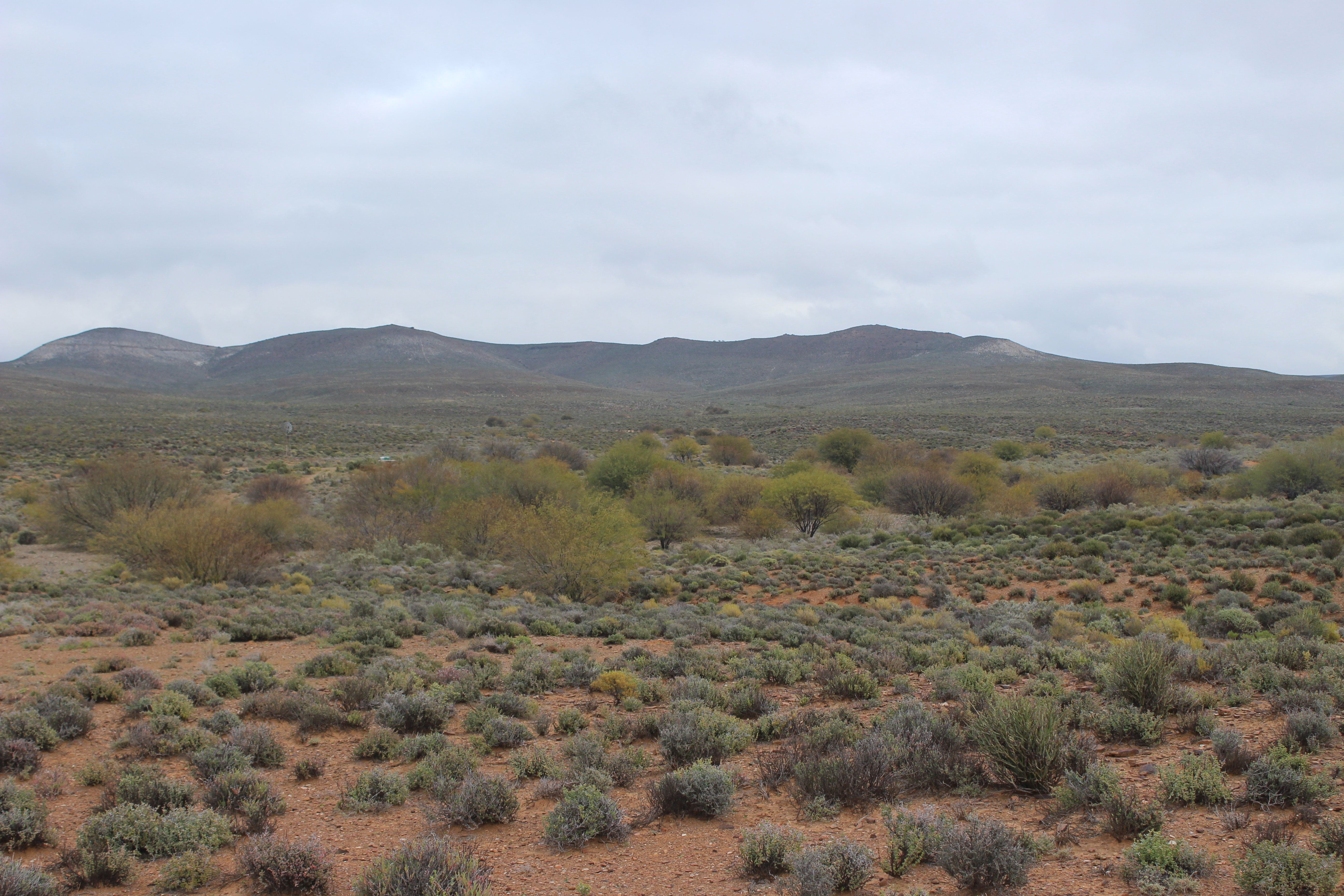
Over 70 million hectares across South Africa and Namibia are now choked by invasive and encroaching plants. They were not always there. Most arrived as colonial imports: timber for mines, shade for farms, fences for livestock. Then the elephants were shot, the land was fenced, the fires were suppressed, and the bush took over.
Invasive alien plants were introduced to Southern Africa from the 1680s onwards for timber, mining, dune stabilisation, and livestock fodder. In Namibia, native species have also encroached far beyond historical densities. The explosion was driven by the loss of megaherbivores (elephants, rhino), the fencing of landscapes, the replacement of wild browsers with cattle, and colonial fire suppression. The result: 25+ million hectares invaded in South Africa, 45+ million hectares encroached in Namibia. Every claim in this issue is sourced.
The Colonial Timber Imperative
The story begins in the 1680s. The Dutch East India Company (VOC) urged Cape officials to plant trees to address timber shortages in the colony. Pine seeds were first brought to the Cape between 1685 and 1693 at the behest of Jan van Riebeeck. Governor Simon van der Stel claimed to have planted 28,987 oak, 459 alder, and 81 ash trees by 1694, with a policy of compulsory tree planting by colonists.
Commercial pine planting began in earnest around 1825. The earliest record of pine invading natural vegetation dates to approximately 1855, when Pinus halapensis was noted spreading into the fynbos biome. Today, softwood plantations cover 707,200 hectares in South Africa.
Eucalyptus arrived circa 1828 via an Indian Ocean trade route: Australia to Mauritius to the Cape Colony. Nearly 150 eucalypt species were introduced between 1828 and 1940. The expansion was driven by the need for cheap, fast-growing wood for mining props, firewood, railway sleepers, and poles. Five eucalyptus species have since become naturalised and invasive.
Sources: Showers, K.B. (2010), "Prehistory of Southern African Forestry," Tokai Park Archives; van Wilgen & Richardson (2012), "Three centuries of managing introduced conifers in South Africa"; Bennett, B.M. (2016), "South African eucalypts," Geoforum; FAO, "Status of Invasive Tree Species in Southern Africa"; Stellenbosch University eucalyptus research; The Conversation (2019).
A Timeline of Arrival
Without their attendant natural enemies, mostly left behind in the country of origin, alien plants are able to survive, reproduce, and spread unaided and at alarming rates across the landscape.
— ARC-PPRI, South African Department of AgricultureWell-Intentioned Introductions, Catastrophic Consequences
Every one of these species was introduced with purpose. Pines for timber. Eucalyptus for mining props. Acacias to hold back sand dunes. Prickly pear as fencing. Prosopis for shade and livestock fodder in arid regions. Lantana as a garden ornamental. None were introduced as invasives. All became invasives because their natural enemies, the insects, mites, and fungal pathogens that control them in their countries of origin, were left behind.
In Namibia, the story has an additional dimension. The dominant encroacher species, Senegalia mellifera (black thorn) and Dichrostachys cinerea (sickle bush), are not alien at all. They are native to Namibia. They have simply proliferated far beyond their historical equilibrium densities because the ecological controls that once kept them in check have been systematically dismantled.
10 million hectares invaded by approximately 180 alien species. Of 8,750 tree and shrub species introduced, 161 are now invasive. 68% are woody species. (FAO/ISSG; Springer, 2020)
45+ million hectares encroached, ~60% of the country. Senegalia mellifera and Dichrostachys cinerea account for 40% of encroached area. Only Prosopis is an alien invasive. (MDPI Encyclopedia; UNFCCC NDC)
Sources: FAO (ISSG), "Invasive species and the Working for Water programme"; Springer (2020), "The Biogeography of South African Terrestrial Plant Invasions"; MDPI Encyclopedia, "Bush Encroachment in Namibia"; UNFCCC, Namibia's Updated NDC 2023.
Conservation is a middle-class affair in most countries. Working for Water works with the poorest of the poor.
— Prof. Kader Asmal, Former Minister of Water Affairs and Forestry, South Africa · Founder of Working for Water, 1995Why the Population Exploded: Five Drivers
The question is not why these plants were introduced. The question is why they exploded. The answer lies in five interconnected drivers, each of which removed a natural control that had kept Southern African landscapes in balance for millennia.
- 1The megaherbivores were killed. A landmark study by Stevens, Erasmus, Archibald, and Bond (2016), published in Philosophical Transactions of the Royal Society B, studied 70 years of woody cover changes across 1,020 km² of South African savannahs. The finding was unequivocal: woody cover doubled everywhere between 1940 and 2010, except in conservation areas with elephants, where cover remained essentially stable (33.7% to 34.2%). In commercial ranches, cover rose from 27% to 42%. In communal rangelands, from 17.5% to 40%. The authors concluded that "elephants in low-rainfall savannahs prevent encroachment and localized megafaunal extinction is a probable additional cause of encroachment." (Stevens et al., 2016, Phil. Trans. R. Soc. B, 371(1703), PMC4978877)
- 2Wild browsers were replaced with cattle. Pre-colonial landscapes supported mixed herbivore guilds: elephants pushed over trees, black rhino and eland browsed woody plants, while zebra and wildebeest grazed grass. Cattle eat almost exclusively grass. They remove the grass layer, eliminating competition for water and light, but leave woody seedlings untouched. The fundamental ecological mismatch is clear: cattle suppress grass without controlling bush. In Namibia, nearly 70% of the population depends on agricultural activities, and the beef industry is the mainstay of farming communities, making this transition especially consequential. (IntechOpen, "Integrated Plant Invasion and Bush Encroachment Management"; Tandfonline, 2014, African Journal of Range & Forage Science; Conservation Namibia)
- 3The land was fenced. Fences fragmented habitats and blocked migration corridors, eliminating the trampling and browsing pressure that controlled woody seedlings. In Namibia, the 1,250 km Veterinary Cordon Fence ("the Red Line") runs from the eastern border with Botswana through to the western desert. Research in the Kruger to Canyons Biosphere showed that following large-scale fence removal, elephant density increased 16-fold, with measurable changes to vegetation structure. (Springer, 2022, Ecosystems; Frontiers in Ecology and Evolution, 2023; Wikipedia, "Red Line (Namibia)"; LAC Namibia)
- 4Fire was suppressed. Fire suppression laws were established as early as 1926 during the European colonial era, based on the incorrect belief that fire was unnecessary in savannas. Regular prescribed burning was not introduced in the Kruger National Park until 1957. Early commercial farmers in Namibia viewed fire as destructive, not realising that grass is rejuvenated by occasional fires at the start of the rainy season that also kill young woody seedlings. (Koedoe journal; ScienceDirect, 2018; SciELO SA, 2009; Conservation Namibia)
- 5Rising CO2 gave woody plants an edge. Stevens et al. (2016) found that elevated atmospheric CO2 is likely the primary global driver of encroachment. CO2 enhances the water-use efficiency of C3 woody plants relative to C4 grasses, giving trees and shrubs a competitive advantage. By 2010, 20% of arid savannah sites exceeded predicted maximum woody cover, compared to only 6% in 1940, even in areas with declining rainfall. (Stevens et al., 2016; Nature Communications, 2018, "Drivers of woody plant encroachment over Africa")
The self-reinforcing cycle: Less grass (overgrazed) means less fuel for fire, which means more woody seedling survival, which means more bush, which means less grass. Once established, bush encroachment becomes self-perpetuating even after grazing is reduced. (Stevens et al., 2016, Phil. Trans. R. Soc. B)
Sources: Stevens et al. (2016), Phil. Trans. R. Soc. B, 371(1703), PMC4978877; IntechOpen; Tandfonline (2014), African Journal of Range & Forage Science; Koedoe; ScienceDirect (2018); SciELO SA (2009); Nature Communications (2018); Conservation Namibia; Springer (2022), Ecosystems; Frontiers in Ecology and Evolution (2023).
Woody cover doubled in all land uses between 1940 and 2010, except in conservation areas with elephants in low-rainfall savannahs, where cover remained essentially stable.
— Stevens, Erasmus, Archibald & Bond · Phil. Trans. R. Soc. B, 2016Namibia: An Area Larger Than Germany
In Namibia, over 45 million hectares of land are classified as bush-encroached, approximately 60% of the country's total land area. Densities reach up to 6,000 bushes per hectare in severely affected areas. The encroachment is growing at approximately 3.2% per year. Stemming this spread would require de-bushing across 1.4 million hectares annually; current national efforts cover only an estimated 200,000 hectares per year.
A single 2.5-metre-tall Senegalia mellifera bush draws up over 60 litres of water from the ground per day. An average encroached hectare can host over 2,000 bushes. Billions of cubic metres of water are lost each year. Prosopis trees deplete groundwater up to six times faster than naturally spaced indigenous trees. Roughly 18% of the potential inflow of the Neckartal Dam in the lower Fish River is estimated to be lost to Prosopis infestation alone.
Agricultural productivity in Namibia has declined by two-thirds in recent decades, mainly due to bush encroachment. The economic cost to farmers exceeds N$2.7 billion annually in lost beef production. The estimated value of ecosystem services that could be restored from controlling encroachment is US$5.8 billion.
A landmark study by Rohde and Hoffman (2012) used 52 historical photographs from the 1876 Palgrave Expedition, one of the earliest detailed visual records of central and southern Namibia before German colonisation, and re-photographed the same locations to document over 130 years of change along a 1,200 km climatic gradient. Above approximately 250 mm mean annual precipitation, significant increases in tree and bush cover were documented, linked to land-use transformation, historical events, and elevated CO2. (Rohde & Hoffman, 2012, Science of the Total Environment)
Sources: UNFCCC, Namibia's Updated NDC 2023; MDPI Encyclopedia, "Bush Encroachment in Namibia"; Financial Mail, "Namibia's Biomass Boom," October 2025; PANORAMA Solutions; Conservation Namibia; Cheetah Conservation Fund; UNIDO; Stafford et al. (2017), ScienceDirect; Rohde & Hoffman (2012), Science of the Total Environment; Strohbach et al. (2015), Prosopis encroachment at Gibeon.
Bush thinning has overall positive to neutral effects on local ecosystems and wildlife, and it is a viable method to restore wildlife habitats and grazing lands.
— Dr. Laurie Marker, Founder, Cheetah Conservation Fund · CCF, NamibiaThe Fencing Cascade: How Walls Made Wilderness Into Thicket
Before colonial-era land management, Southern Africa's savannahs were maintained as open grasslands through a combination of regular fires (set by lightning and indigenous peoples), browsing by elephants, black rhino, giraffe, eland, and kudu, seasonal migrations of vast herds, and unfenced landscapes allowing dynamic grazing and browsing patterns.
Fencing dismantled all of these controls simultaneously. Stock fences separated farms. Veterinary fences attempted to control animal disease. Game fences enclosed private wildlife ranches. International boundary fences sealed borders. The ecological consequence was a cascade:
Migration blocked: Wild herbivores that historically moved over large tracts tracking patchy rainfall were confined to isolated blocks. (Conservation Namibia)
Browsers excluded: Diverse wild feeding guilds (including elephants, kudu, eland, black rhino) were replaced by cattle that eat only grass. (Conservation Namibia)
Grass overgrazed: Confined cattle herds removed the grass layer, eliminating competition for woody seedlings. (Stevens et al., 2016)
Fire fuel removed: Less grass meant less fuel for fire, so woody seedlings survived. The cycle became self-reinforcing. (Atlas of Namibia; Koedoe)
The evidence is stark. The Stevens et al. (2016) study provides the clearest proof: the only areas where woody cover did not increase over 70 years were conservation areas with elephants in low-rainfall savannahs. Every other land use, including commercial ranches, communal lands, and conservation areas without elephants, saw woody cover approximately double.
Sources: Stevens et al. (2016), Phil. Trans. R. Soc. B; Springer (2022), Ecosystems; Conservation Namibia, "Beating Back the Bush"; Atlas of Namibia; Wikipedia, "Red Line (Namibia)"; LAC Namibia.
How Seeds Spread: Birds, Cattle, and Floodwaters
The invasion is not static. It is actively expanding through multiple dispersal mechanisms. Native frugivorous birds are major long-distance dispersers of invasive plants, with predicted seed dispersal distances exceeding 15.7 km. The dark-capped bulbul is likely the main native avian disperser of Lantana camara.
Prosopis seeds are spread through livestock digestive systems. Seeds pass through the digestive tracts of cattle, goats, and wild herbivores, with rumen enzymes breaking seed dormancy and actually promoting faster germination. Livestock moving in search of pasture spread seeds into new grazing areas and corridors. Prosopis seeds also spread via flooding, colonising riparian corridors through waterborne dispersal.
Notably, goats destroy most seeds they ingest, making them potential biocontrol agents, a point of practical relevance for land managers.
Sources: ScienceDirect (2015), "Seed dispersal effectiveness: birds feeding on seeds of invasive Acacia cyclops"; ScienceDirect (2022), "Native avian species visiting fruiting invasive Lantana camara in KwaZulu-Natal"; MDPI Sustainability (2021), "Prosopis Species, An Invasive Species and a Potential Source of Browse."
African Sun Holdings: Reversing 340 Years of Ecological Damage
The scale of the invasion, 70+ million hectares across South Africa and Namibia, demands a response that matches it. African Sun Holdings (ASH) has amassed 15 million hectares of land across Ethiopia, Namibia, and South Africa. The approach is direct: large-scale manual harvesting with full root removal, converting invasive biomass into biochar, wood chips, torrefied wood, wood vinegar, and animal feed, while generating verified carbon credits through Carbon Standards International.
In Namibia, ASH's Prime project tackles encroacher bush that now covers over 40 million hectares, an area comparable to Sweden. The project includes a dedicated Tribal Community Programme, creating 85 permanent direct roles and an estimated 663 indirect jobs. In South Africa, the Prieska project in the Upper Karoo covers 8,000 hectares with potential to expand across a further 30,000.
Clearing just one hectare of invasive plants restores enough water to meet the annual needs of 1,300 people. ASH's pipeline of 20+ projects targets 20,000 permanent jobs, 2.5 million annual carbon credits, and 100,000 hectares of land restored annually, with 20% of profits reinvested into local communities.
Sources: African Sun Holdings Investor Presentation, March 2026; Carbon Standards International Project Registry (GCSP1046, GCSP1147); UN; Water SA.
These plants did not invade on their own. They were brought here with good intentions and left to spread when the ecological systems that would have controlled them were dismantled. The solution is not to wait for nature to correct a manmade problem. It is to act at scale, now.
— Darryl Claret, African Sun HoldingsThree hundred and forty years of introductions. A century of fencing, fire suppression, and megaherbivore loss. The result is 70 million hectares of Southern African land choked by plants that were never meant to dominate these landscapes.
The science is unambiguous. Where elephants remain, woody cover stays stable. Where they were removed and replaced by cattle behind fences, the bush doubled. The invasion is not a mystery. It is a consequence of decisions, and it can be reversed by better ones.